An Old Court Judgment Isn't on Your Credit Report. It Can Still Cost You Your Car.
Civil judgments left credit reports in 2017, but they can still be enforced. Massachusetts just banned a debt buyer accused of using them to seize cars.
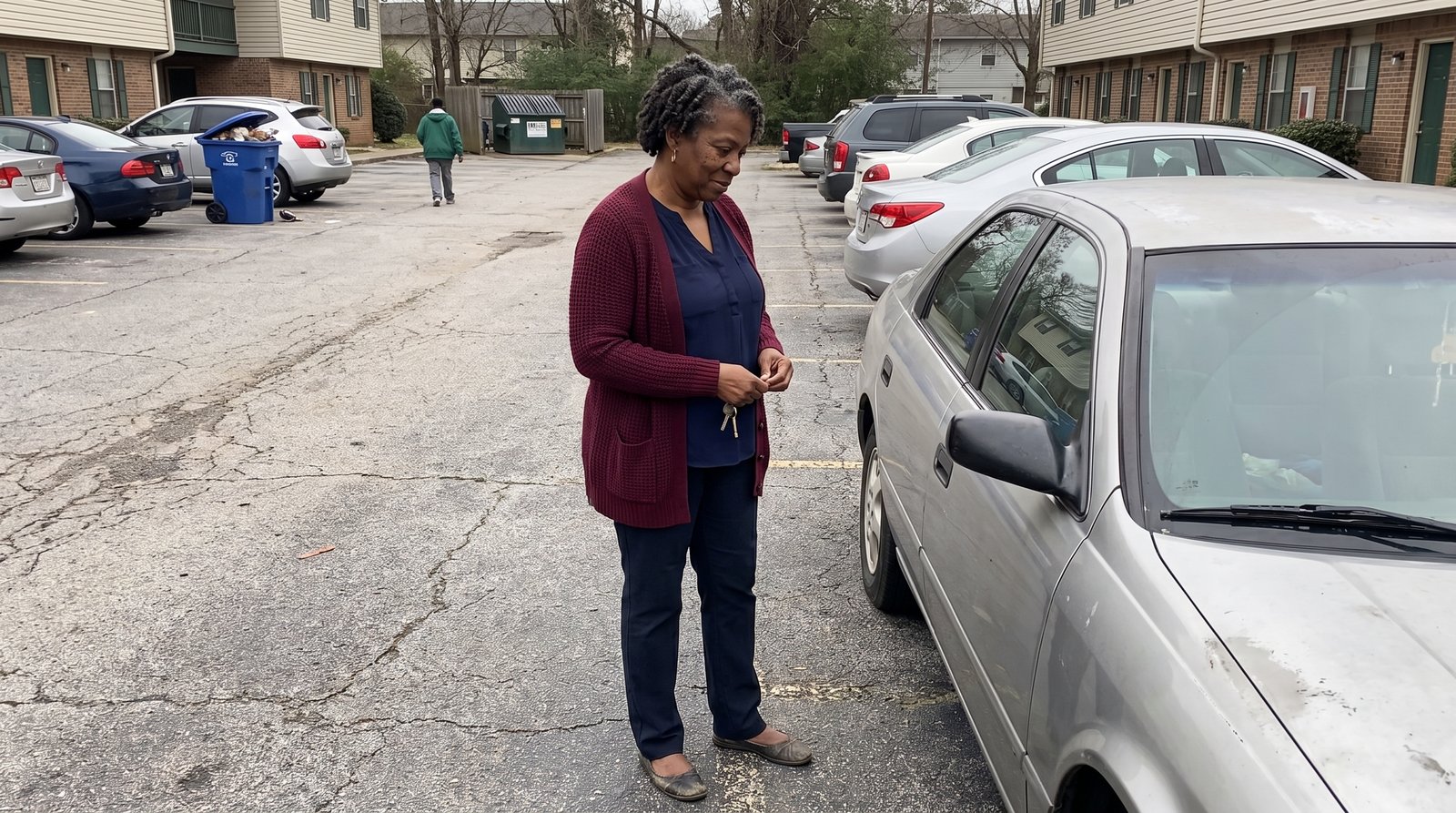
You walk out in the morning and your car is gone. It wasn’t stolen and it wasn’t repossessed, because you don’t owe anything on it. A company you’ve never heard of had it taken over a credit card bill you stopped thinking about years ago. You pulled your credit reports last spring and there was nothing on them about a lawsuit.
That’s not a glitch. It’s how an old court judgment works, and one Massachusetts company allegedly built a business on it.
What happened in Massachusetts
On September 14, 2026, Massachusetts Attorney General Andrea Joy Campbell announced a consent judgment with Judgment Acquisitions Unlimited, Champion Funding Inc. and their owner, Andrew Metcalf, of Avon. A consent judgment is a court order both sides agree to. The state sued in 2024.
The state alleged that the companies seized people’s cars to pressure them into paying, including cars worth so little that the law protects them from seizure. The cars had nothing to do with the debts. They weren’t collateral for any loan. The amended complaint said the companies used seizures “as a means of persuasion rather than satisfaction,” which means the point was to make you pay, not to sell the car and pay off the debt. The state also alleged they tried to collect old debt past the statute of limitations, collected without a license and overstated interest in court filings.
Under the settlement, Metcalf and his companies are permanently banned from buying, selling or collecting debts in Massachusetts. They walk away from about $52 million in claimed debt owed by more than 6,000 residents. They have to surrender their collector license, dismiss pending cases and file paperwork marking judgments as satisfied. A $650,000 penalty is suspended for 13 years. It only comes due if they break the deal or their financial disclosures turn out to be false. These are the state’s allegations, and a settlement is not a finding that they’re true.
GBH News reported back in 2024 on people who lost cars this way over credit card bills more than a decade old.
Why it works on people
Because the judgment is real. A debt buyer, or the original lender before it sold the debt, sued you and won. Maybe you never got the papers. Maybe you got them and didn’t show up because you figured you couldn’t win. Either way, a judge signed something, and a judgment gives the holder real power to take property.
Then it goes quiet for years. That’s the part people don’t expect. Under Massachusetts law, M.G.L. c. 260 § 20, a judgment is presumed paid only after 20 years. So a judgment from 15 years ago can still be alive today.
And your car is the perfect pressure point. The company doesn’t need it to be worth much. It needs you to need it. If the car is how you get to work, you’ll find the money, even for a bill you think you don’t owe.
Why your credit report won’t warn you
Most people assume a lawsuit would show up on their credit. It used to. Then the three big bureaus settled with state attorneys general and agreed to the National Consumer Assistance Plan. Starting July 1, 2017, a public record needed a name, an address, and a Social Security number or date of birth before it could appear on a credit file. The CFPB says that when the plan took effect, all civil judgments were removed.
So the judgment against you is invisible on your Equifax, Experian and TransUnion reports. Credit monitoring won’t flag it either. It still lives in the court’s records, and it can still be enforced. A clean credit report tells you nothing about whether someone holds a judgment against you.
Why it falls apart
Cheap debt, costly pressure. In a 2013 study, the FTC found debt buyers paid an average of 4.0 cents per dollar of debt, and the price of debt older than 15 years was “virtually zero.” That’s an industry average, not what these companies paid. But do the arithmetic. $52 million spread across 6,000 people is about $8,700 each, and since it’s “more than 6,000,” the real average is lower than that. At four cents on the dollar, an $8,700 debt costs a buyer about $350. For a very old one, it costs close to nothing. Your car is worth far more to you than the debt is worth to them.
Some cars are protected by law. Massachusetts exempts “an automobile necessary for the debtor’s personal transportation or to secure or maintain employment” up to $7,500 in wholesale resale value, under M.G.L. c. 235 § 34. If you’re 60 or older or have a disability, it’s up to $15,000. Every state has its own exemptions, with different dollar amounts.
Federal law backs that up. If the company counts as a debt collector under the Fair Debt Collection Practices Act, 15 U.S.C. § 1692f bars “unfair or unconscionable means” to collect any debt. Under § 1692e, a collector can’t misrepresent “the character, amount, or legal status of any debt,” and § 1692e(5) bans threatening “any action that cannot legally be taken.” For debts that were never turned into a judgment, Regulation F, 12 C.F.R. § 1006.26(b), says a collector “must not bring or threaten to bring a legal action” to collect a debt whose statute of limitations has run out.
The cost nobody mentions: once a car gets towed, tow and storage fees start piling up on top of the debt. If you miss work while you sort it out, you can lose a job over a bill you didn’t know was still alive.
What to do instead
Every one of these steps is free.
- Look yourself up. Search your state court’s online case records, or call the clerk’s office in each county where you’ve lived. That’s where a judgment shows up, not on your credit report.
- Ask for proof in writing. If a collector contacts you, you have 30 days after its validation notice to dispute in writing under 15 U.S.C. § 1692g(b). It then has to stop collecting until it mails you verification or a copy of the judgment. Check whose name is on it, the date, and the amount.
- Claim your exemptions. If a car, bank account or paycheck is being targeted, tell the court in writing that the property is exempt. Ask the clerk how your state handles it, and don’t let the deadline pass.
- Don’t ignore court papers. Showing up is how you raise a statute of limitations defense or say the debt isn’t yours. Ignoring them is how a lawsuit turns into a judgment without you in the room.
- Get free legal help. Many legal aid offices help people with debt collection cases at no cost. This article is education, not legal advice.
- Report it. File a complaint with your state attorney general and with the CFPB at consumerfinance.gov/complaint.
I’ve been on the receiving end of collectors claiming I owed money I didn’t. Companies counting on you not to ask questions don’t like it when you do.
My own position, plainly: CreditShield is a free do-it-yourself credit app with a one-time $47 Full Access upgrade. It helps you dispute errors on your credit reports. It can’t stop a judgment, and no credit service can, because judgments aren’t on your credit reports to begin with. If you’re not sure where to start, bring it to our free community on Skool.
Sources
- Massachusetts Debt Buyers and Collectors Will Cease Activities in the State Over Aggressive Tactics, Including Vehicle Seizures — Troutman Pepper Locke, Regulatory Oversight, 2026-09-22
- Massachusetts Just Sent a Message to Unlicensed Debt Collectors and Buyers: $52 Million and a Permanent Exit — Consumer Financial Services Law Monitor, 2026-09-18
- Mass. AG bans illegal debt collectors, secures $52M in debt relief for residents — Public Citizen Consumer Law & Policy Blog, 2026-09-17
- Debt collector barred from Mass. as AG secures $50M in debt relief for 6,000 residents — Boston.com, 2026-09-15
- Avon debt collector is barred from operating in Massachusetts under settlement — The Boston Globe, 2026-09-15
- Proposed settlement between Mass. debt collector and state could help thousands of debtors — GBH News, 2026-09-02
- Have an old or forgotten credit card bill? You might end up carless. — GBH News, 2024-06-10
- Your Paid-Off Car Can Still Be Seized Over a Debt That Has Nothing to Do With It — The Auto Wire via Yahoo News, 2026-09-22
- The Structure and Practices of the Debt Buying Industry — Federal Trade Commission, January 2013
- Removal of public records has little effect on consumers’ credit scores — Consumer Financial Protection Bureau, 2018-02-22
- M.G.L. c. 235 § 34, Property exempt from execution and M.G.L. c. 260 § 20, Presumption of satisfaction of judgment — Massachusetts Legislature
- 15 U.S. Code § 1692e, § 1692f and § 1692g — Legal Information Institute, Cornell Law School
- 12 CFR § 1006.26, Collection of time-barred debts — Consumer Financial Protection Bureau